






Twenty years after first arriving in Korea in 2006, Broni-Sefah remains committed to protecting the rights of Ghanaians, supporting their integration into Korean society, and laying a stronger foundation for future generations.
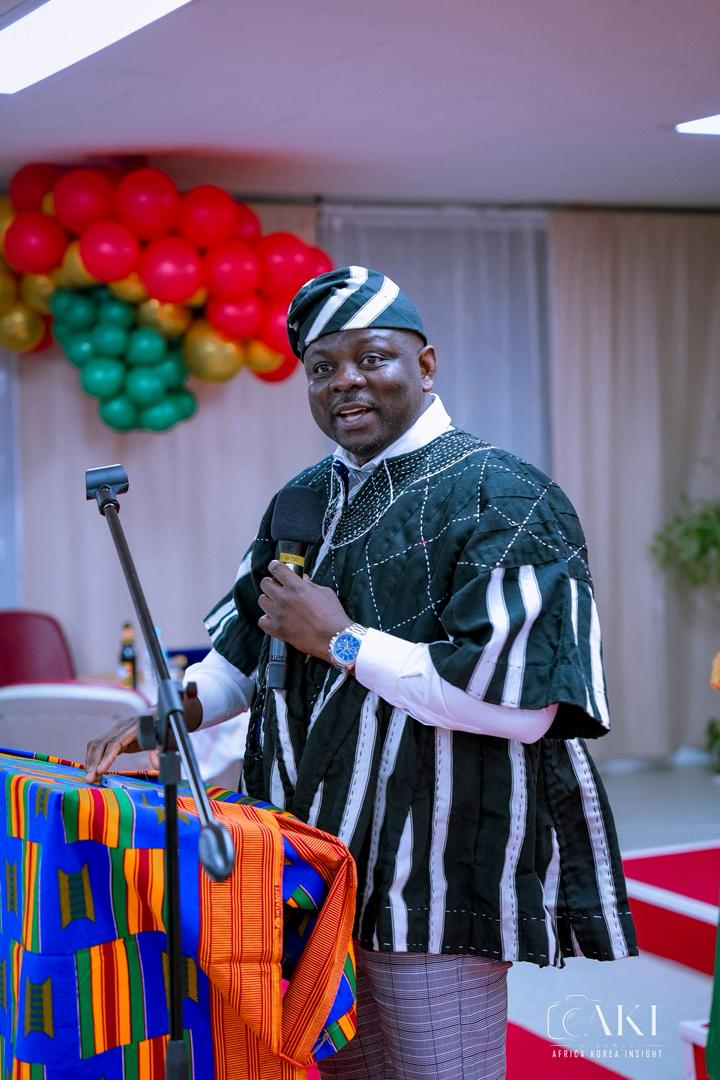
Reflecting on his two decades in South Korea, Michael Broni-Sefah, President of the Ghanaian Community Association in Korea (GHANASKO), recalled a community clean-up initiative in Beobwon-eup, Paju City. The activity concluded with a tree-planting ceremony led by a former Ghanaian Ambassador to South Korea.
For Broni-Sefah, that tree has remained a powerful symbol of how people who once arrived in an unfamiliar country gradually established roots and became part of their new communities.
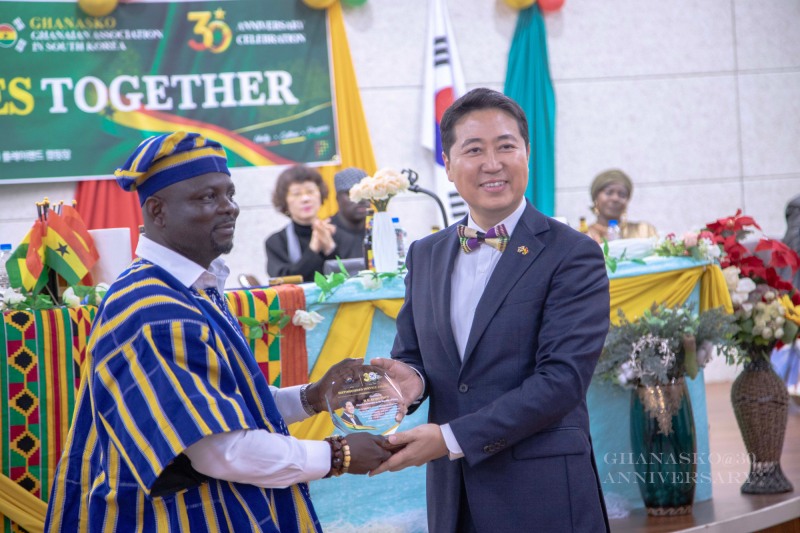
According to the association on October 14, more than 1,000 Ghanaians residing in Korea and other participants gathered for GHANASKO's 30th anniversary celebration, held on October 4 at a campsite on Bogwang-ro in Gwangtan-eup, Paju City, Gyeonggi Province. The event commemorated three decades of the association's history while bringing members of the Ghanaian community together in a spirit of unity and solidarity.
In a written interview marking the association's 30th anniversary, Broni-Sefah reflected on his journey in Korea, his involvement in community affairs, and his vision for GHANASKO's future.
Alongside his responsibilities as association president, he is actively engaged in trade and commerce, helping connect Korean businesses with commercial opportunities in Ghana and other African countries.
Broni-Sefah first visited South Korea in 2006, driven by a desire to better understand a country that had achieved remarkable economic development through technology, manufacturing, and innovation.
At the time, he had no idea that Korea would eventually become such an important part of his life.
Twenty years later, he describes Korea as his “second home.”
Celebrating his 50th birthday in Korea last year was a particularly meaningful moment. It reminded him that a substantial part of his adult life had been spent in a country that had gradually become inseparable from his personal and professional journey.
His involvement with GHANASKO began in 2007, when a friend introduced him to the association.
Over the years, he participated regularly in community meetings, sporting activities, welfare initiatives, and cultural events. Working alongside successive community leaders taught him that effective leadership involves far more than organising public events or making appearances at celebrations.
“Community leadership means making phone calls, solving problems, and reaching out to people facing difficult situations. Sometimes, when something needs to be done, you must also be prepared to contribute your own resources.”
These experiences eventually led him to contest the GHANASKO presidential election in 2023, which he won.
Since assuming office, he has placed particular emphasis on ensuring that members of the Ghanaian community do not have to face serious challenges alone.
According to Broni-Sefah, GHANASKO has assisted Ghanaians affected by a wide range of difficulties, including those stranded by travel restrictions during the COVID-19 pandemic.
The association has also responded to cases involving serious workplace injuries, disputes with employers, compensation claims, medical emergencies, deaths, assistance to bereaved families, and repatriation to Ghana.
He described the association's fundamental responsibility as ensuring that “when someone faces a difficult problem, they know they do not have to deal with it alone.”
Under the current executive leadership, GHANASKO has also appointed an officer responsible for consular affairs, strengthening coordination among the association, Ghanaians residing in Korea, and the Embassy of Ghana in Seoul.
For Broni-Sefah, the most important consideration in preparing the October 4 anniversary celebration was unity.
He wanted Ghanaians from different backgrounds, including student associations, cultural organisations, and sporting groups, to feel that GHANASKO was a community to which they all belonged.
He emphasised that GHANASKO is a non-partisan organisation and that political opinions, religious affiliations, or membership in particular groups should never determine whether someone receives assistance or has a voice in community affairs.
The anniversary celebration, which attracted more than 1,000 participants according to the association's figures, became a particularly memorable occasion for him.
Seeing Ghanaians living in different parts of South Korea come together in one place reinforced his belief in the strength and importance of a united community.
Another meaningful moment was the recognition of Ghanaian television personality Sam Okyere for his contributions to raising Ghana's profile in South Korea through broadcasting and cultural activities.
“In the past, when we told people we were from Ghana, many did not know much about the country. But when we mentioned Sam Okyere, they would respond, ‘Oh, Ghana!’ That kind of recognition matters to an immigrant community.”
Broni-Sefah hopes younger generations will remember and appreciate the efforts of those who helped open doors for them.
He stressed the importance of recognising GHANASKO's founders and earlier community leaders, whose dedication laid the groundwork for the association's development.
In his view, today's Ghanaian community stands on the foundations established by previous generations, and the current generation has an equally important responsibility to create opportunities for those who will follow.
Looking ahead, one of his principal goals is to connect more Ghanaians living in South Korea with GHANASKO.
He expressed his hope that every Ghanaian residing in Korea would eventually register as a member of the association.
He is also working toward establishing a board that would allow leaders of major Ghanaian organisations to participate more actively in discussions and decisions concerning the community.
Another priority is expanding orientation and settlement support for newly arrived Ghanaians.
Broni-Sefah believes that understanding Korean laws, workplace culture, the healthcare system, immigration procedures, banking, housing, and available support services from an early stage is essential for successful and stable integration into Korean society.
He also hopes to expand sporting events, cultural festivals, business networking opportunities, and charitable initiatives in both Ghana and South Korea.
Further cooperation with Korean local governments, universities, businesses, and community organisations is another area he intends to pursue.
In the longer term, Broni-Sefah envisions GHANASKO becoming a recognised representative voice of the Ghanaian community when relevant institutions in Ghana and South Korea discuss issues affecting Ghanaians and other Africans residing in Korea.
“I hope that when people gather to celebrate GHANASKO's 60th anniversary in another 30 years, they will be able to say that our generation left behind a strong foundation.”
His message to Ghanaians living in South Korea is to respect Korean laws, treat those around them with consideration, and continue supporting one another.
He believes that every Ghanaian living abroad has the potential to serve as an unofficial ambassador, as they may be the first person through whom someone encounters Ghana and forms an impression of the country.
To Koreans, he extended an invitation to visit Ghana and experience its culture, hospitality, and people firsthand, while also exploring opportunities for business and investment.
The future of Ghana–Korea relations that Broni-Sefah envisions is one in which cooperation in trade, education, culture, and technology develops into lasting relationships between people.
Twenty years of living in South Korea, together with nearly two decades of involvement in GHANASKO, have taught him that meaningful international connections are not built solely through formal agreements or institutional partnerships.
They are also created through the everyday efforts of individuals who support one another, build trust, and help their communities grow.
황상욱 기자 eyes@beyondpost.co.kr